
A Builder’s Guide to Deck Joist Tape for Lasting Decks
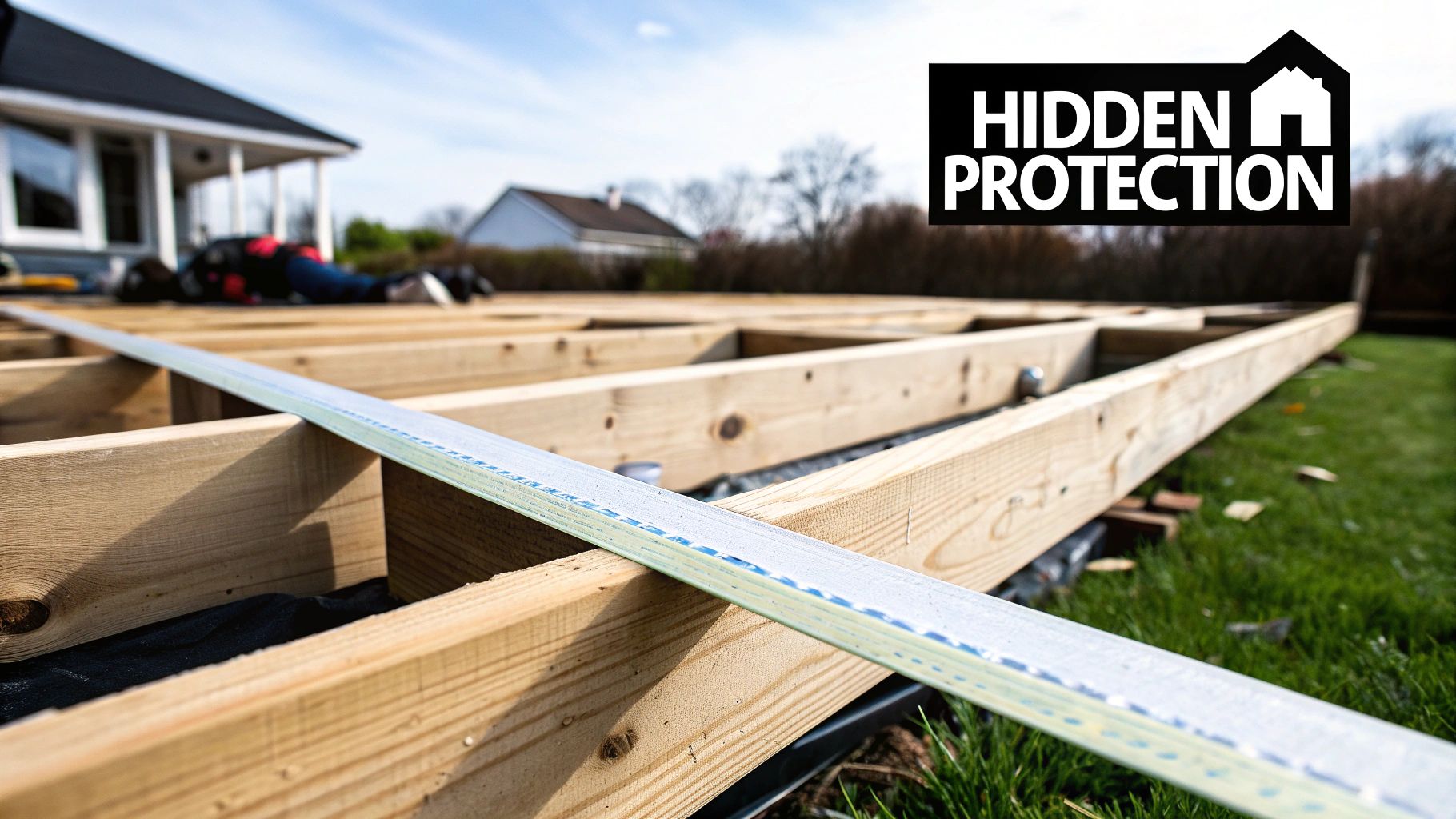
Think of deck joist tape as a specialized raincoat, but for your deck's hidden foundation. It’s a self-adhesive, waterproof barrier that you apply directly to the top of your joists and beams. Its main job? To stop moisture from seeping into the wood and causing rot, especially around all those screw holes.
The Unsung Hero of a Long-Lasting Deck
You can spend a fortune on a beautiful, modern deck with high-performance composite or PVC decking that's designed to last for decades. But what about the structure holding it all up? The pressure-treated wood frame, while tough, has a critical weakness: water.
Every single screw you drive through the deck boards creates a tiny entry point for moisture. This water then inevitably pools on the flat, horizontal surface of the joists. It just sits there.
Over time, this constant exposure is a recipe for disaster. It leads directly to wood rot, decay, and eventually, structural failure. This creates a dangerous and expensive problem where your pristine deck surface is being supported by a crumbling, unsafe foundation. Deck joist tape is the simple, essential shield against this all-too-common issue.
Why Is It a Non-Negotiable Deck Component?
Honestly, applying this protective layer is one of the most cost-effective things you can do to guarantee the longevity of your entire deck. It’s all about making sure the substructure's lifespan actually matches that of the high-quality decking you put on top. Without it, you’re just setting yourself up for premature repairs that involve the back-breaking work of removing the entire deck surface just to get at and replace rotted joists.
Here's what it really does for you:
- Complete Moisture Barrier: It creates an impenetrable seal over the wood, forcing water to run off instead of sitting on top of the joists and soaking in.
- Self-Sealing Around Fasteners: This is the magic. High-quality butyl tapes form a tight little gasket around every screw, closing off the most common pathway for water to get in.
- Prevents Premature Decay: By keeping the wood dry, it stops the rot process before it can even start. This is absolutely vital in Canada's harsh freeze-thaw cycles, which can wreak havoc on wood.
Think of it this way: You wouldn't build a house with a state-of-the-art roof and then leave the foundation completely exposed to the elements, would you? Deck joist tape provides that same fundamental level of protection for your outdoor living space.
This simple addition is a small step in the building process, but it delivers a massive return on investment. And it's not just about the wood; it protects other hardware from moisture, too. You can learn more about protecting other deck components in our guide on how to buy post caps for your fence or deck. By sealing the frame, you’re building a deck that’s designed to last a lifetime, not just a few seasons.
Why Modern Decks Demand Joist Protection
That stunning deck surface gets all the glory, but its real strength—its very lifespan—depends entirely on the unseen frame holding it up. Modern composite and PVC decking is tough stuff, engineered to laugh off fading, staining, and moisture for 25 years or more. But what about the pressure-treated wood substructure underneath? If it fails early, that beautiful deck becomes nothing more than a good roof on a crumbling foundation.
This is exactly where deck joist tape comes into the picture. It's a simple, but crucial, line of defence.
The number one enemy of any wood deck frame is moisture. It’s relentless. Water always finds a way through the tiny gaps between deck boards, where it pools on the flat, horizontal surfaces of the joists. Even worse, every single screw you drive into the wood creates a perfect little channel for water to seep deep into the lumber, starting the rot from the inside out. Joist tape acts as an impermeable shield, completely sealing off the tops of your joists and beams so water is forced to run off instead of soaking in.
The Two Core Pillars of Protection
Think of protecting your deck frame as a two-front war. You're not just fighting off one problem; you're defending against two distinct, equally destructive forces. A high-quality joist tape tackles both at once, giving you a truly resilient substructure.
- Airtight Moisture Defence: This is the most obvious job. The tape physically covers the wood, and its specialized adhesive self-seals around every fastener. This creates a tight gasket that slams the door on water intrusion at the most vulnerable spots.
- Stopping Galvanic Corrosion: Here’s the silent killer many people miss. Modern pressure-treated lumber is loaded with copper to fend off insects and decay. When that copper touches galvanized steel hardware—like your joist hangers and screws—and moisture is present, a chemical reaction called galvanic corrosion kicks off. This process can chew through your fasteners surprisingly fast, compromising the structural integrity of your entire deck.
Deck joist tape creates a physical, non-conductive barrier between the treated wood and the metal hardware. It completely stops that corrosive reaction before it even has a chance to start. This ensures that your high-quality connectors and fasteners, like those from Xtreme Edeals Inc., keep their grip for the life of the deck.
A Smart Investment Against Costly Repairs
At the end of the day, using joist tape is all about making sure your substructure lasts as long as your decking. It's a small, proactive step that prevents a massive headache down the road.
By investing a little bit in joist protection upfront, you're essentially buying insurance against a future repair job that could cost thousands of dollars and mean tearing up your entire deck just to replace rotten joists.
Here in Ontario, where XTREME EDEALS INC. is proudly based, we've seen a huge surge in deck construction. But the local climate is tough. Data from Ontario building inspectors shows that unprotected joists rot 3-5 times faster in our humid summers and icy winters. This leads to over 15,000 deck-related insurance claims every year, costing homeowners an average of CAD $12,500 per repair. You can dive deeper into the market for these materials by reading the full research on building construction tapes. Those numbers make it clear: protecting your deck's foundation isn't just a best practice—it's an economic necessity.
Choosing the Right Joist Tape for Your Project
Picking the right deck joist tape isn't just a minor detail—it's one of those critical decisions that directly impacts how long your deck's foundation will actually last. While you'll see a few options out there, the choice really boils down to two main materials: older, asphalt-based tapes and the modern, high-performance butyl tapes.
For years, asphalt tapes were what you used, but today’s deck building standards have overwhelmingly shifted to butyl. The reason is simple: butyl wins in just about every category that matters for a long-lasting deck. It’s a far more stable and flexible material, which is absolutely crucial for a structure that’s constantly expanding and contracting with the weather.
Butyl Versus Asphalt: A Clear Winner
Think of the difference between butyl and asphalt like choosing between modern, high-tech running shoes and old leather boots. Sure, both will get you down the path, but one is specifically engineered for flexibility, durability, and performance in all conditions. That's butyl tape. It stays pliable in our cold Canadian winters and won't turn into a gooey, oozing mess in the summer heat—a classic complaint with asphalt products.
Most importantly, butyl’s aggressive adhesive creates a ridiculously strong bond with the wood and has exceptional self-sealing capabilities. When a deck screw punctures butyl tape, the material literally flows around the threads, forming a tight, waterproof gasket. This "self-healing" property is the real magic that stops water from sneaking down the fastener and into your joist.
The professional standard is clear: butyl tape is the superior investment. Its ability to maintain a perfect seal through extreme temperature swings and its much cleaner application process make it the go-to for contractors and DIYers who want to build a deck that lasts a lifetime.
When you're comparing the two main players in the deck tape game—butyl and asphalt—it helps to see their strengths and weaknesses side-by-side. While both aim to protect your deck's substructure, their performance differs significantly, especially over the long haul.
Deck Joist Tape Comparison: Butyl vs. Asphalt
| Feature | Butyl Tape (e.g., Xtreme Joist Tape) | Asphalt (Bitumen) Tape |
|---|---|---|
| Adhesion | Superior bond to wood, composites, and metal, even in damp conditions. | Moderate adhesion; can lose its grip in extreme temperatures. |
| Self-Sealing | Excellent. Malleable material creates a tight, waterproof gasket around fasteners. | Good, but can become brittle in the cold or soft in the heat, compromising the seal. |
| Temperature Stability | Stays flexible and stable from freezing cold (-40°C) to intense heat (115°C). | Can become brittle and crack in cold weather; may ooze and get messy in high heat. |
| Durability | Highly resistant to UV degradation and environmental breakdown over decades. | Can dry out and crack over time with UV exposure, reducing effectiveness. |
| Application | Cleaner and easier to work with. Doesn't leave a heavy residue. | Can be messy, sticky, and leave black residue on hands and tools. |
| Cost | Higher initial cost. | Lower initial cost. |
In the end, while asphalt tape might seem like a way to save a few dollars upfront, butyl tape is the smarter long-term investment. Its reliability and superior protective qualities ensure you're not facing premature rot and expensive repairs down the road.
Key Factors for Selecting Your Tape
Once you've wisely settled on butyl, a few key specs will help you zero in on the perfect product for your job. Paying attention to these details ensures you get the reliable, long-term protection your deck deserves.
Thickness (Mils): Look for a tape with some real substance to it, typically between 20 and 40 mils. A thicker tape provides a more robust barrier against moisture and is much better at resisting punctures.
Adhesive Strength: Not all glues are created equal. You need a tape with an aggressive adhesive that grabs onto pressure-treated wood and absolutely will not lift or peel over time.
UV Resistance: It's almost guaranteed your deck frame will be exposed to sunlight for days, if not weeks, during construction. A tape with good UV resistance won't break down or lose its stickiness before you get the deck boards on.
Proper Width: This is just common sense, but it’s crucial. Match the tape width to your joist size. Use 1-5/8" tape for single joists, 3-1/8" or 4" tape for double joists, and a wider 6" tape for beams and ledger boards.
Top-tier tapes like Xtreme Joist Tape push these features to the next level. You'll find products boasting 12-month UV resistance and the ability to perform in temperatures from a frigid -40°C to a scorching 115°C. In field trials, tapes like these have been shown to slash rot incidence by a staggering 85%. This kind of advanced protection is especially vital in places with harsh weather, where the tape also prevents corrosion on the hardware used with pressure-treated lumber.
Ultimately, choosing a quality tape from a supplier you trust gives you priceless peace of mind. Browsing the excellent selection of deck accessories at Xtreme Edeals Inc. is a great way to ensure you're getting a product with proven performance, backed by a solid warranty for a truly resilient deck foundation.
A Step-by-Step Guide to Applying Joist Tape
Putting down deck joist tape is a pretty simple job, but it pays off big time in the long run. Think of it as a small effort that becomes a powerful defence against rot. Getting a perfect, long-lasting seal really just comes down to good prep work and a little patience. The goal here is to create a solid, unbroken waterproof shield over every piece of your deck's substructure.
Before you even think about peeling the backing off a roll, the most crucial step is getting the surfaces ready. The adhesive on quality butyl tape needs a clean, dry surface to grab onto and form that permanent bond. So, take the time to sweep or blow off every single joist, beam, and ledger board. You want them totally free of sawdust, dirt, or any other grime.
If the wood is damp from recent rain, you absolutely have to wait for it to dry completely. Slapping tape on a wet surface is the number one reason for it to fail later. Moisture gets trapped, preventing the adhesive from bonding properly with the wood fibres. A clean, dry start isn't just a suggestion—it's essential for the tape to do its job.
The Application Process
Once your frame is prepped and ready, the process itself is straightforward. Start at one end of a joist, peel back a few inches of the tape's paper backing, and press it firmly onto the wood. Continue unrolling the tape down the length of the joist, smoothing it down with your hand as you go to make sure you have solid contact.
Here’s a pro tip: use a small hand roller (often called a J-roller) and go over the tape one more time after you've laid it down. This simple tool applies consistent pressure, forcing out any tiny air bubbles and ensuring the adhesive makes maximum contact with the wood grain. This one extra step dramatically improves the bond and makes the seal that much more effective.
The flowchart below gives you a quick look at the buying process before you even get to this installation stage.
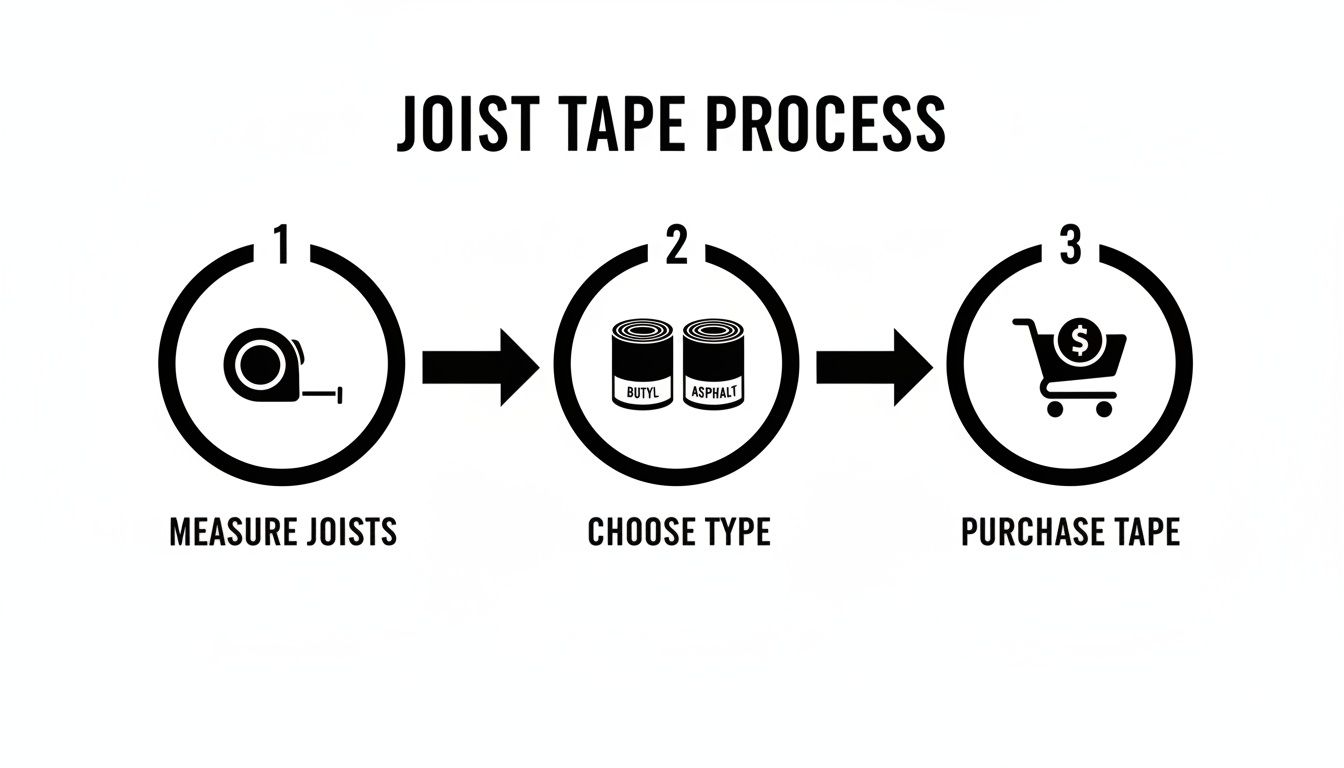
This visual breaks down the first few steps, from measuring your joists and picking the right tape to making the purchase from a trusted supplier like Xtreme Edeals Inc.
Best Practices for a Bulletproof Seal
To create a truly waterproof system, you have to sweat the small stuff. Paying close attention to the details, especially around the trickier parts of the frame, is what ensures there are no weak spots in your deck’s armour.
- Overlapping Seams: When you get to the end of a roll and need to start a new one, always overlap the seams by at least one inch. Press that overlap down firmly to create a single, continuous seal.
- Wrapping the Edges: Don't just lay the tape flat on top. Fold the edges down over the sides of the joist by about a half-inch. This little detail is huge—it helps actively shed water away from the sides of the lumber, rather than letting it cling.
- Covering All Horizontal Wood: It's not just for joists. Remember to apply tape to the tops of all your beams, the ledger board against the house, and any stair stringers. Basically, any horizontal wood surface that can catch and hold rainwater needs protection.
- Working Around Posts and Hardware: For awkward spots around post bases or over joist hangers, cut custom pieces of tape to fit. Carefully seal all the seams and edges, making sure every last bit of wood is covered. The goal is to leave no opening for moisture to find its way in.
Follow these steps, and you'll be applying deck joist tape like a pro. You're giving every inch of that frame the protection it needs to stand strong and support your deck for decades.
Common Installation Mistakes to Avoid
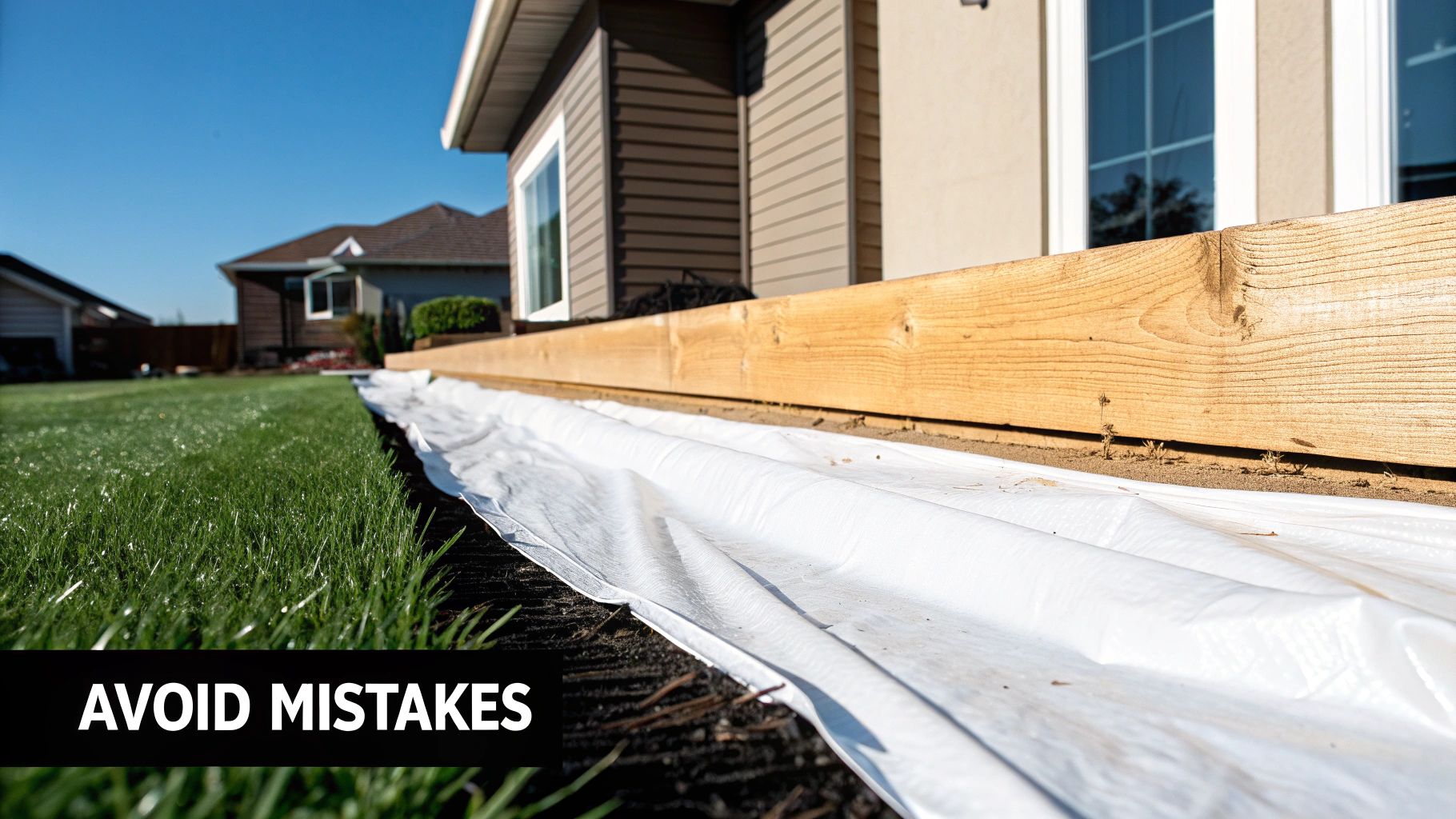
Even the best deck joist tape on the market will fail if you don’t install it right. Getting that flawless application is what unlocks the full protective power of the product, but a few simple mistakes can sabotage your efforts, creating weak spots that welcome moisture in. Steering clear of these pitfalls is the key to giving your deck’s foundation the airtight protection it deserves.
The single most common—and most damaging—error is applying the tape to a dirty or damp surface. The adhesive on high-quality butyl tape is incredibly sticky, but it’s not magic. It needs a clean, dry surface to grab onto and create a permanent bond. If you try to apply it over sawdust, grime, or damp wood, it’s never going to fully adhere, which leads to peeling and compromised seals down the line.
Poor Application Techniques
Beyond getting the surface prepped, how you handle the tape itself makes a huge difference. Rushing the job often leads to sloppy work that traps moisture instead of keeping it out. A classic mistake is stretching the tape as you lay it down. This creates tension in the material, and over time, the tape’s memory will cause it to pull back and lift away from the wood, especially at the ends.
Another critical error is leaving wrinkles or air bubbles behind. These aren't just cosmetic flaws; they're tiny pockets where water can pool. Instead of shedding moisture, these little imperfections trap it directly against the wood, creating the exact rot-prone environment you’re trying to prevent.
Think of it like putting a screen protector on your phone. If you don’t smooth it out properly, the bubbles underneath make the whole thing useless. The same principle applies here—a smooth, firm application is non-negotiable for an effective seal.
Sizing and Overlapping Errors
Choosing the wrong size tape or failing to overlap it properly can also create sneaky channels for water to seep through. These details might seem small, but they can undermine the entire system.
Here are the most common sizing and seam mistakes to watch out for:
- Using Tape That’s Too Narrow: The tape needs to be wide enough to cover the top of the joist and fold over the sides by at least a centimetre or so. If it only covers the top surface, water can still cling to those sharp corners and soak right into the wood.
- Improper Overlaps: When you start a new roll, you have to overlap the previous piece by at least one inch. A simple butt joint where the two ends just meet creates a tiny gap that’s a guaranteed entry point for moisture.
- Ignoring Key Areas: Forgetting to tape your ledger boards, beams, and stair stringers leaves major parts of your substructure exposed. Remember, every horizontal piece of wood is a potential water trap.
Avoiding these mistakes really just comes down to a little patience and attention to detail. Taking the time to do it right the first time ensures your deck’s frame gets the bulletproof protection you paid for. Properly protecting your entire outdoor structure is key, and you can get some great ideas by checking out these top tips on how to build a privacy fence like a carpenter.
Your Top Deck Protection Questions Answered
Even after you're sold on the idea of joist tape, a few questions always seem to come up. Let's tackle the most common ones I hear from homeowners and pros alike, so you can move forward with confidence and build a deck frame that's truly up to the challenge.
Isn't Pressure-Treated Wood Already Protected? Why Bother with Tape?
This is easily the biggest misconception out there, and it's a critical one. Yes, pressure-treated lumber is designed to fend off rot and insects, but it’s not bulletproof. Think of the chemical treatment as a protective skin.
Every single time you drive a screw or nail into a joist, you're punching a hole right through that skin. Now, multiply that by the thousands of fasteners in a typical deck. Each one of those holes becomes a tiny funnel, inviting water to bypass the treated surface and soak into the vulnerable wood core. Joist tape acts like a perfect, self-healing gasket around every fastener, sealing off those entry points for good.
Can't I Just Use Roofing Tape or a Good Quality Duct Tape?
Absolutely not. It might be tempting to grab something you already have in the garage, but this is a classic case of using the wrong tool for the job. These products are simply not engineered for the unique environment of a deck substructure.
Duct tape, for instance, uses a rubber-based adhesive that gets obliterated by UV rays and the wild temperature swings a deck goes through season after season. Roofing tapes are often asphalt-based, which can turn brittle and crack in the cold or become a gooey mess in the summer heat.
A proper deck joist tape is in a league of its own. It's almost always made with a butyl adhesive—a synthetic rubber that’s incredibly stable, stays flexible in any weather, and is specifically formulated to create a permanent, watertight seal around screws and nails. Using Xtreme Joist Tape ensures you get this professional-grade performance.
Using a substitute is a shortcut that will almost certainly lead to a long-term failure.
How Do I Figure Out How Much Tape I Need?
Don't worry, the math here is pretty straightforward. You just need to calculate the total length of all the lumber in your deck frame.
Here’s a simple way to break it down:
- Get Your Joist Total: Multiply your number of joists by their length. (e.g., 15 joists that are 12 feet long = 180 linear feet).
- Add the Perimeter and Beams: Measure the length of your ledger board, rim joists, and all supporting beams. Add that to your first number.
- Don't Forget Blocking: If you have any blocking between joists, add up the length of those pieces, too.
- Buy a Little Extra: Take your final total and add 10% as a buffer. This will cover you for overlaps and the occasional slip-up. That final number is how much tape you need to buy.
Does Joist Tape Do Anything for a Steel Deck Frame?
Yes, and it plays a crucial role, but for an entirely different reason. With a steel frame, your enemy isn't rot—it's corrosion.
A common scenario is attaching pressure-treated wood stair treads or blocking for railing posts directly to a galvanized steel frame. When these two materials touch, a destructive process called galvanic corrosion can kick in. The copper found in the wood's treatment chemicals reacts with the zinc coating on the steel, causing the steel to corrode much faster than it should.
Joist tape acts as a perfect dielectric barrier. By placing it between the wood and the steel, you physically separate the two dissimilar materials, stopping that destructive chemical reaction cold.
For a complete selection of premium deck protection products and all the hardware you need for your next project, trust the experts. XTREME EDEALS INC. offers high-quality solutions to ensure your deck stands the test of time. Explore our collection at https://www.xtremeedeals.ca.

